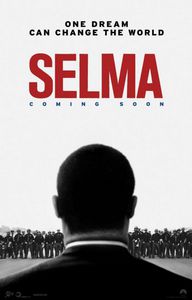
| Selma | |||||
| Pathé (2014) | |||||
| Drama, History, Biography | |||||
|
In Collection
#1103 |
|||||
|
0*
|
|||||
|
|||||
|
|
|
||||||||||||
| David Oyelowo | Dr. Martin Luther King / Jr. | |
| Carmen Ejogo | Coretta Scott King | |
| Jim France | Gunnar Jahn | |
| Trinity Simone | Girl #1 | |
| Mikeria Howard | Girl #2 | |
| Jordan Rice | Girl #3 | |
| Ebony Billups | Girl #4 | |
| Nadej K. Bailey | Girl #5 | |
| Elijah Oliver | Boy #1 | |
| Oprah Winfrey | Annie Lee Cooper | |
| Clay Chappell | Registrar | |
| Tom Wilkinson | President Lyndon B. Johnson | |
| Giovanni Ribisi | Lee White | |
| Haviland Stillwell | President's Secretary | |
| Andre Holland | Andrew Young | |
| David Oyelowo | ||
| Carmen Ejogo | ||
| Jim France | ||
| Trinity Simone | ||
| Mikeria Howard | ||
| Jordan Rice | ||
| Ebony Billups | ||
| Nadej K. Bailey | ||
| Elijah Oliver | ||
| Oprah Winfrey | ||
| Clay Chappell | ||
| Tom Wilkinson | ||
| Giovanni Ribisi | ||
| Haviland Stillwell | ||
| Andre Holland |
| Director |
|
||
| Producer |
Christian Colson
Dede Gardner |
||
| Writer |
Paul Webb
|
||
| Cinematography |
Bradford Young
|
|
|
"Selma," as in Alabama, the place where segregation in the South was at its worst, leading to a march that ended in violence, forcing a famous statement by President Lyndon B. Johnson that ultimately led to the signing of the Civil Rights Act. |
|
|
||||||||